Showing posts with label Zen. Show all posts

Friday, 22 April 2016

Plum Village: Programs for Children and Teens

http://plumvillage.org/retreats/visiting-us/programs-for-children-and-teens/

Programs for Children and Teens

During our annual 4-week Summer Retreat in July/August, Plum Village monks and nuns offer a special program of mindful play for children, and a guided mindful activity program for teenagers. The programs are mostly outdoors, enjoying the beautiful countryside and nature around Plum Village.

Monday, 24 August 2015

War Remembrance in Japan's Buddhist Cemeteries

1. http://japanfocus.org/-Brian-Victoria/4353/article.html
2. http://japanfocus.org/-Brian-Victoria/4367/article.html

War Remembrance in Japan's Buddhist Cemeteries (1-2)


War Remembrance in Japan’s Buddhist Cemeteries, Part I: Kannon Hears the Cries of War

The Asia-Pacific Journal, Vol. 13, Issue. 31, No. 3, August 03, 2015

Brian Victoria


Abstract

While the role of Yasukuni Shrine in both commemorating and eulogizing Japan’s wartime
aggression is well known (and controversial), little to no attention has been paid to a similar
role played by a number of Buddhist temples in contemporary Japan. For example,
Kōa Kannon (Kannon for a Prosperous Asia) temple (興亜観音寺), located in Atami,
a hot-springs resort south of Tokyo, is one such war-eulogizing Buddhist temple.
This temple was initially established in the late 1930s at the initiative of Imperial Army General
Matsui Iwane, supreme commander of the Japanese attack on Nanjing in December 1937,
better known as the "Rape of Nanjing."
In the postwar era, Kannon Bodhisattva, the Buddhist personification of compassion enshrined
at Kōa Kannon, has gone on to become one of the main Buddhist figures employed throughout
the country to comfort the “heroic spirits” (eirei) of all Japanese soldiers who died in the war
while, at the same time, valorizing and eulogizing the war they fought in. In addition to
Kannon-centric temples, the major Shingon sect-affiliated monastic complex on Mt. Kōya now
plays a major role in the remembrance of the war dead, including an effort to transform
convicted "war criminals" into national “martyrs” (junnan-sha), an effort backed by the current
Japanese government.

War Remembrance in Japan’s Buddhist Cemeteries, Part II: 

Transforming War Criminals into Martyrs: “True Words” on Mt. Kōya

The Asia-Pacific Journal, Vol. 13, Issue. 34, No. 3, August 24, 2015

Brian Victoria


Tuesday, 11 August 2015

Our desire for passion

http://zennist.typepad.com/zenfiles/2015/08/our-desire-for-passion.html

AUGUST 10, 2015

Saturday, 4 July 2015

From the Heartland to a New Epicenter: “Conceiving the Indian Buddhist Patriarchs in China”

http://newlotus.buddhistdoor.com/en/news/d/47197

From the Heartland to a New Epicenter: “Conceiving the Indian Buddhist Patriarchs in China”


Buddhistdoor International Raymond Lam 
2015-07-03

It is not always easy to imagine the intentions of those who write hagiography, which is formally defined as the biography of a saint or religious leader. However, in the case of Chinese treatments of Indian masters, hagiography was not merely a means to inspire Chinese Buddhists with the miracle-making and moral power of their Indian spiritual forebears. It was, at its core, a way to redefine models of Buddhist sanctity and legitimize China as an ideal land for the flourishing of Buddhism.

Tuesday, 23 June 2015

Trycicle : On Not Being Stingy

http://www.tricycle.com/special-section/not-being-stingy

On Not Being Stingy

The Eighth Zen Precept is about more than emptying your pockets.
Sensei Nancy Mujo Baker


Instant Enlightenment and Instant Madness, by Brad Warner

https://hardcorezen.info/instant-enlightenment-and-instant-madness/3630

Instant Enlightenment and Instant Madness, 


by Brad Warner

I’ve written a few pieces on this blog about the problems with schemes that promise you a so-called “enlightenment experience” fast. Mostly I’ve tended to focus on Genpo Roshi’s bogusBig Mind™ nonsense. But there are plenty more where that came from.

Wednesday, 18 February 2015

THE MONK Buddhism documentary 720p

https://www.youtube.com/watch?v=h6KiwiwFijw

THE MONK Buddhism documentary 720p

Published on Feb 17, 2015
The film is about a holy camp holding in a temple in Fujian, China. More than 100 people around the world, who are at any ages,take part in this camp. Some of them are devout disciples, sincere teenagers, while some of them are lazy young monks. And there is also a German teenager who is curious about Chinese culture. Distinctively, by using peaceful lens language, it wants to tell us a special religious life in temple.

Thursday, 15 January 2015

Korea – Venerable Bhikshuni Daehaeng Kun Sunim (1927 – 2012): A Great Meditation Master

https://snfwrenms.wordpress.com/2015/01/12/korea-venerable-bhikshuni-daehaeng-kun-sunim-1927-2012-a-great-meditation-master/


Korea – Venerable Bhikshuni Daehaeng Kun Sunim (1927 – 2012): A Great Meditation Master


by Barbara Yen
This article is written by  Barbara Yen in conjunction with 2014 International Bhikkhuni Day Celebration at Gotami Vihara Society Malaysia Honouring Eminent Asian Buddhist Women in the Modern Era.

Here's How Zen Meditation Changed Steve Jobs' Life And Sparked A Design Revolution

http://www.businessinsider.in/Heres-How-Zen-Meditation-Changed-Steve-Jobs-Life-And-Sparked-A-Design-Revolution/articleshow/45827259.cms

Here's How Zen Meditation Changed Steve Jobs' Life And Sparked A Design Revolution

Wednesday, 17 December 2014

China's mountain hermits seek a highway to heaven

http://www.mysinchew.com/node/104226

China's mountain hermits seek a highway to heaven

by Tom HANCOCK

Zhongnan Mountains (AFP) -- His unheated hut is half way up a mountain with no electricity, and his diet consists mostly of cabbage. But Master Hou says he has found a recipe for joy.
"There is no happier way for a person to live on this earth," he declared, balancing on a hard wooden stool outside his primitive mud brick dwelling.

Hundreds of millions have moved to China's urban areas during a decades-long economic boom, but some are turning their backs on the bright lights and big cities to live as isolated hermits.

Their choice puts them in touch with an ancient tradition undergoing a surprising modern-day revival.
 

Monday, 8 December 2014

Gautama Sees the Morning Star: a Rohatsu Meditation

http://www.patheos.com/blogs/monkeymind/2014/12/gautama-sees-the-morning-star-a-rohatsu-meditation.html?utm_source=SilverpopMailing&utm_medium=email&utm_campaign=monkeymind_120814UTC031207_daily&utm_content=&spMailingID=47575425&spUserID=OTYyOTA4NTcwMTUS1&spJobID=581551810&spReportId=NTgxNTUxODEwS0

Gautama Sees the Morning Star: a Rohatsu Meditation

by James Ford, Dec 8th, 2014

It’s hard to know anything with certainty about antiquity. Okay, perhaps that’s true for today, as well. But, history blends with myth much more completely with the old stories. Sometimes myth completely overtakes history

Tuesday, 2 December 2014

The Buddhist theory of Truth

http://lotusinthemud.typepad.com/sujatin/2014/11/the-buddhist-theory-of-truth-dharmavidya.html

The Buddhist theory of Truth


Thursday Nov 20 | Lotusinthemud, by Dharmavidya
 
I was asked does Buddhism have a theory of truth and, if so, what is it? The quick answer is yes, it does, and Buddha knows. Let's unpack this

HypeBeast: Discovering the Beauty in Imperfection

http://hypebeast.com/2014/11/kyoto-discovering-the-beauty-in-imperfection-wabi-sabi?utm_source=feedburner&utm_medium=feed&utm_campaign=Feed%3A+hypebeast%2Ffeed+%28Hypebeast%29

HypeBeast: Discovering the Beauty in Imperfection


Whether or not you are familiar with Wabi-Sabi, it is a difficult concept to fully understand. Ingrained in Japanese design and influenced by Buddhism, the viewpoint is simply defined as the beauty of imperfect, impermanent and incomplete things, which many of us associate with the cliché “perfect imperfection.”

Friday, 21 November 2014

WildFoxZen: Top Ten Issues for Zen Today

http://www.patheos.com/blogs/wildfoxzen/2014/11/top-ten-issues-for-zen-today.html

Top Ten Issues for Zen Today


We’ve been settling into Portland, ME, since our move here in July. For one thing, Bodhi sure looks comfortable on my zafu, no?
For another, people don’t sound as “different” as they did when we moved. Heck, the other day I called my old health insurance company in Minneapolis and talked to a nice lady there about an issue that I was having. OMG, did she have a Fargo accent! We don’t talk like that around here, that’s for gall darn sure!

Tuesday, 11 November 2014

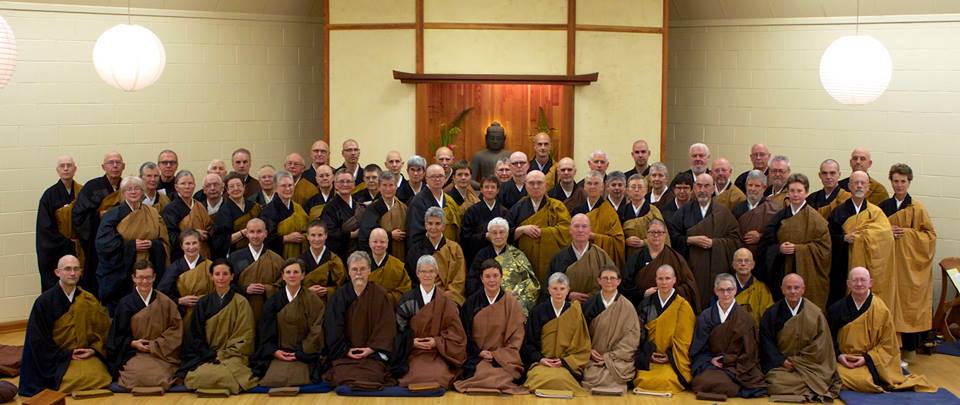
ON ASPECTS OF THE REFORMATION OF SOTO ZEN BUDDHISM IN NORTH AMERICA

http://www.patheos.com/blogs/monkeymind/2014/11/on-aspects-of-the-reformation-of-soto-zen-buddhism-in-north-america.html?utm_source=SilverpopMailing&utm_medium=email&utm_campaign=monkeymind_111114UTC031104_daily&utm_content&spMailingID=47386241&spUserID=OTYyOTA4NTcwMTUS1&spJobID=561445572&spReportId=NTYxNDQ1NTcyS0

ON ASPECTS OF THE REFORMATION OF SOTO ZEN BUDDHISM IN NORTH AMERICA

SZBA 2014
ON ASPECTS OF THE REFORMATION OF SOTO ZEN BUDDHISM IN NORTH AMERICA
An Open Letter to the Leadership and Membership
Of the Soto Zen Buddhist Association
And all care about the Zen Dharma in the West
James Myoun Ford, Osho
Senior Guiding Teacher’s Council
Boundless Way Zen

Article